A brake disc (disc rotor) works together with the brake caliper and brake pads to create friction, slowing the wheel and increasing tire traction against the road surface.
The information below is based on the general functions and types of brake discs.
What Is a Brake Disc?
A brake disc is one of the most important components in a disc braking system. It is typically mounted directly to the wheel and works with the brake pads inside the caliper. When the brake pads clamp the disc, friction is generated, slowing the wheel and bringing the motorcycle to a controlled stop.
What Does a Brake Disc Do?
When the rider applies the brake lever, hydraulic pressure is transmitted through the brake system to the caliper. The caliper pistons then press the brake pads against the brake disc, generating friction that slows wheel rotation and increases tire grip on the road surface, resulting in effective braking performance.
Types of Brake Discs
Based on Construction Design
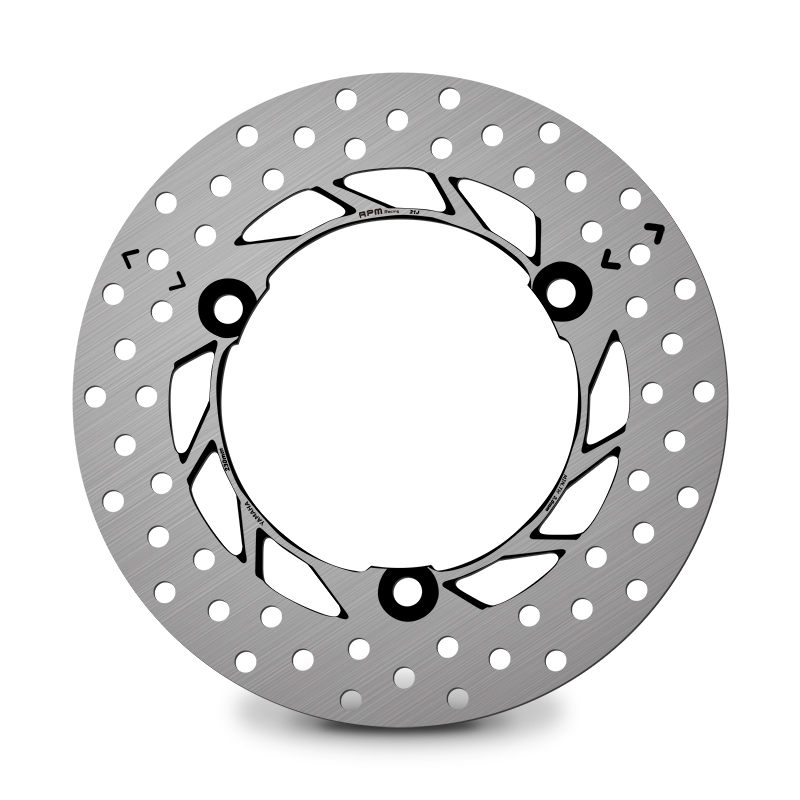
Fixed Brake Disc
A fixed brake disc is manufactured as a single-piece structure, with the braking surface and mounting carrier integrated into one unit.
Advantages:
- Strong and rigid construction
- Durable and reliable
- Cost-effective design
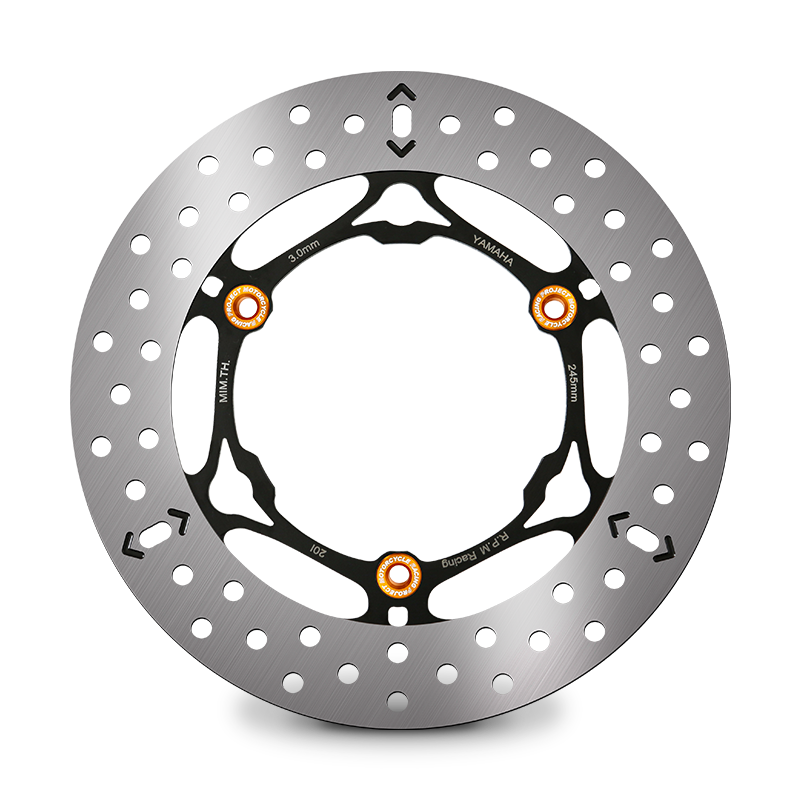
Floating Brake Disc
A floating brake disc consists of a braking surface connected to a mounting carrier through floating rivets or buttons.
Advantages:
- Compensates for minor alignment variations between the brake pads and disc
- Improves braking consistency
- Reduces heat transfer from the braking surface to the mounting carrier
- Enhances heat dissipation and thermal stability
Based on Material Composition
Common brake disc materials include:
Cast Iron
- Excellent friction characteristics
- Strong braking performance
- Popular in racing applications
- More susceptible to corrosion
Stainless Steel
- Excellent corrosion resistance
- Durable and low maintenance
- Most commonly used material for street motorcycles
Carbon-Ceramic Composite
Also known as carbon composite brake discs, these are typically made from advanced materials such as:
- Carbon (C)
- Silicon Dioxide (SiO₂)
- Kevlar Fibers
Advantages:
- Extremely lightweight
- Exceptional heat resistance
- Outstanding performance under extreme braking conditions
Different materials offer unique characteristics in terms of:
- Hardness
- Friction coefficient
- Heat resistance
- Deformation control
- Corrosion resistance
For most motorcycles, cast iron and stainless steel remain the most commonly used options.
Why Upgrade Your Brake Discs?
Factory-installed brake discs are generally designed for everyday commuting and normal road use. Riders who frequently ride on racetracks, mountain roads, or in aggressive riding conditions may benefit from upgraded brake components.
For optimal braking performance, a complete braking system upgrade should be considered, including:
- Brake master cylinder
- Stainless steel braided brake lines
- Caliper brackets
- Brake calipers
- Brake pads
- Brake discs
- Tires
A balanced braking system delivers greater safety, control, and braking efficiency.
How to Choose the Right Brake Disc
When upgrading from a factory brake disc, the first consideration is disc size.
Disc Diameter
If you increase the rotor size, you may also need:
- A compatible caliper bracket
- Proper caliper positioning hardware
Floating vs. Fixed Design
Riders seeking improved braking feel and heat management may consider upgrading to a floating brake disc, which offers:
- Better pad-to-disc alignment
- Improved thermal performance
- More consistent braking under demanding conditions
Application and Riding Style
Choose a brake disc that matches your motorcycle's intended use, whether for:
- Daily commuting
- Sport riding
- Touring
- Track use
- Performance customization
RPM Brake Discs: Developed Through Decades of Racing Experience
Driven by a passion for motorcycle performance and innovation, RPM brings nearly 40 years of experience in the research, development, production, and manufacturing of motorcycle performance components.
Supported by extensive tuning data collected from domestic and international motorcycle racing events—including numerous podium finishes—RPM has developed a comprehensive range of brake discs for:
- Scooters
- Sport motorcycles
- Large-displacement motorcycles
- Specialty and custom-built motorcycles
With multiple styles engineered for different riding conditions and performance requirements, RPM brake discs deliver outstanding braking performance, durability, and rider confidence.
Choose the RPM brake disc that best matches you and your motorcycle today.

0 comments